This is more than a story about two remarkable nineteenth-century Indians. It is a story about two competing ways of seeing India itself. Pandita Ramabai and Swami Vivekananda were contemporaries, reformers, and influential voices who introduced India to the Western world.
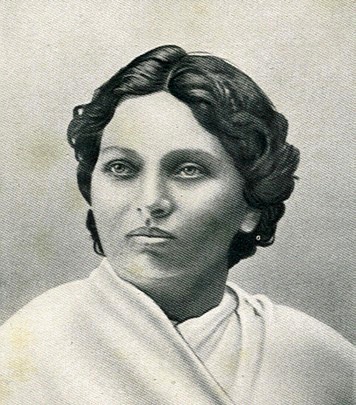
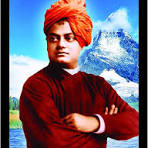
Swami Vivekananda (b. 1863—d. 1902 and Pandita Ramabai (b. 1858—d.1922) were contemporaries for about 39 years. Pandita Ramabai was five years older than the Swami and lived 20 more years than he did.
Both individuals had connections to Brahmo Samaj. Swami Vivekananda was an official member, whereas Pandita Ramabai closely aligned with its principles and members but did not formally join. When Ramabai arrived in Kolkata in 1878, she received a warm welcome from Brahmo Samaj leaders such as Keshab Chandra Sen, who was notably impressed by her Sanskrit skills and encouraged her to study the Vedas, which were traditionally restricted to men.
Although she adopted many of the movement’s social reform ideas—such as opposing child marriage and caste barriers and advocating for female education—she chose to remain independent rather than become a formal member. Later, she established the Arya Mahila Sabha in Pune, emphasising similar reformist goals, before eventually converting to Christianity.
While staying in the United States in 1887, Pandita Ramabai poured her heart into writing the book “The High-Caste Hindu Woman.” Driven by deep empathy and courage, she wanted to share the quiet struggles of high-caste Indian women who were kept from education and independence by rigid traditional customs and patriarchal expectations. Writing in English, she reached out directly to American readers, creating a powerful bridge of understanding. The book became her centrepiece for rallying support and raising funds for a welcoming, secular refuge for young widows back in India. Her message struck a deep chord with readers—selling nearly 10,000 copies in its very first year.
With deep tenderness and moral clarity, Ramabai’s book gently walks readers through the life path of a high-caste woman—from early childhood into child marriage, married life, and the painful isolation of widowhood. She shines a compassionate light on young girls pushed into early marriages between the ages of eight and twelve, pointing directly to traditional texts to show how ingrained these expectations were. Her heart clearly aches for child widows, painting their daily reality as both forced and deeply painful, while passionately calling for women’s education and true freedom as the way forward.
Her moving message resonated deeply across the ocean. During her first visit to the United States between 1886 and 1888, she inspired kind-hearted supporters to form 63 local groups known as Ramabai Circles or Ramabai Associations. Made up mostly of dedicated women, these groups met regularly to share her vision, raise funds, and promise ten full years of financial backing for her future schools and caring mission work in India.
When Vivekananda arrived in the United States in 1893 to attend the World Parliament of Religions, he often found himself answering heartfelt questions about the lives of Indian women and the struggles faced by child widows. While acknowledging these difficult realities, he sought to offer context and explain the cultural perspectives behind them. Over the course of his initial two-and-a-half-year journey, he travelled widely across the country, sharing his wisdom and connecting with eager audiences through countless lectures.
Swami Vivekananda found warm hospitality across many Christian communities in the United States, giving his very first public talk at the Annisquam Universalist Church on August 27, 1893—just weeks before his famous address at the Parliament of Religions. Thanks to their welcoming spirit and open minds, Unitarian congregations in cities like Boston, Detroit, Minneapolis, and Evanston most often invited him to speak. He also shared his thoughts from Congregational and Methodist pulpits throughout the Midwest, while engaging thoughtfully with community and spiritual groups like the YMCA and the Brooklyn Ethical Association.
When speaking to Western audiences—particularly in addressing concerns raised by the American Ramabai Circles—Vivekananda sought to reassure listeners, sharing his perspective that high-caste child widows were not systematically mistreated or forgotten by tradition.
Swami Vivekananda gently acknowledged that high-caste women faced real challenges, much like Ramabai described, yet he believed these traditions were deeply rooted in noble spiritual ideals. He pointed out that traditional Hindu law extended a protective hand to widows by granting them lifelong inheritance rights to their husband’s estate—often offering them greater financial security than many Western wives enjoyed during that era. Rather than viewing the life of an unremarried high-caste widow through a lens of institutional cruelty, he saw it as a path of sacred devotion, imagining her life as a conscious, beautiful journey of spiritual discipline, lifelong learning (brahmacharya), and quiet dedication to her family and faith.
Vivekananda saw the restriction on widow remarriage not as something born of ill intent, but rather as a thoughtful socioeconomic custom of its time. He felt that in communities where the male population was equal to or smaller than the female population, encouraging widows to remain single helped ensure that young, unmarried women had the opportunity to find life partners, thereby maintaining balance and stability within the community.
Vivekananda held a sympathetic view of the hardships faced by young widows who were unable to remarry, yet he firmly believed that India should address its social matters internally without outside or missionary intervention. He expressed concern over reformers who depicted the struggles of child widows in stark terms to Western audiences for fundraising, feeling that such portrayals overlooked the genuine respect and care traditionally woven into the joint-family system and cast an unfair light on Indian culture.
At his heart, Vivekananda believed that decisions such as widow remarriage belonged entirely to women themselves, rather than to male reformers or outside influences. He trusted that by supporting women through education and self-reliance, they would gain the strength and agency to shape social change on their own terms.
Meanwhile, Ramabai poured extraordinary devotion into practical care. Through Sharada Sadan, she offered a safe, loving refuge to hundreds of high-caste child widows, a sanctuary that later expanded through the Mukti Mission to embrace thousands of women, children, and widows in need of comfort and hope.
These two historical paths reflect a delicate balance in how we see India’s journey: one seeks spiritual depth within existing social traditions, while the other faces hardships head-on to bring about immediate relief and transformation. Both approaches, born of deeply felt convictions, highlight the ongoing dance between preserving timeless ideals and courageously reforming the world around us.
(From my forthcoming book: Swami Vivekananda, The Hindu I Admire).


Leave a Reply